
In 2020, British rapper and producer M.I.A. alleged that British Vogue pulled a planned feature story after she publicly expressed vaccine skepticism during the COVID-19 pandemic. The exclusion marked a turning point in how major media outlets respond to public figures’ statements on health and medical matters, and it raised broader questions about the consequences of controversial positions in the age of social media.
This case has since become a reference point for discussions about ideological alignment in business relationships and the costs of public dissent. M.I.A.’s experience reflects a larger tension facing entrepreneurs and public figures: the growing expectation that they align with mainstream positions on divisive topics, and the very real business consequences of deviation. Her exclusion from Vogue wasn’t presented as punishment, but rather as a business decision tied to editorial values and respect for healthcare workers. Yet for many observers, it exemplified how personal beliefs can impact professional opportunities in ways that extend far beyond traditional gatekeeping.
Table of Contents
- How Did M.I.A.’s Vaccine Stance Lead to Her Vogue Exclusion?
- The Business Reality of Ideological Misalignment
- Public Health Statements and Cultural Institutions
- Implications for Entrepreneurs and Public Figures Building Brands
- The Uncertainty of Institutional Values and Future Changes
- Comparing Institutional Response Patterns
- Looking Forward—How Public Figures Navigate the New Landscape
- Conclusion
How Did M.I.A.’s Vaccine Stance Lead to Her Vogue Exclusion?
M.I.A. made her stance public through a series of tweets in March 2020. In one notable post, she wrote, “If I have to choose the vaccine or chip I’m gonna choose death.” She later responded affirmatively when directly asked if she was an anti-vaxxer. When responding to the celebrity promotion of vaccines during the pandemic, she tweeted, “If Alex Jones pays for lying shouldn’t every celebrity pushing vaccines pay too?” These statements drew immediate backlash on social media and from public health advocates. Following these posts, Vogue had scheduled a feature on M.I.A., but the publication ultimately pulled the story. According to the outlet’s editor, the decision was made to maintain editorial respect for NHS frontline workers and the broader public health effort during the pandemic.
M.I.A. publicly stated that the exclusion was directly tied to her vaccine comments. This wasn’t a quiet deprioritization—it was a public business decision that signaled how major cultural institutions would respond to figures who took positions contrary to public health consensus. The incident illustrated how quickly digital statements can trigger institutional responses. Unlike traditional media environments where a public figure might have more distance from controversy, social media amplified M.I.A.’s words instantly and permanently. Vogue’s response was swift and visible, demonstrating that editorial decisions at major publications could now be shaped by real-time social sentiment and perceived alignment with institutional values.

The Business Reality of Ideological Misalignment
For entrepreneurs and public figures, M.I.A.’s experience highlights a critical business limitation: partnerships and platform access increasingly depend on ideological alignment, not just talent or commercial viability. Vogue didn’t dispute M.I.A.’s cultural relevance or her impact on music and fashion—the exclusion was purely about values-based editorial gatekeeping. This distinction matters because it shows that business exclusion doesn’t require performance failure; it requires perceived misalignment. The danger of this dynamic is that it can operate invisibly. Unlike a contract dispute or a performance cancellation, editorial exclusions and partnership rejections often come without detailed explanation.
Public figures and entrepreneurs may simply find themselves unable to secure opportunities without understanding the underlying reason. M.I.A.’s case was unusual in that she publicly called out the exclusion; many similar cases go unspoken. This lack of transparency makes it difficult for those affected to understand what behavior is being penalized or how to adjust their approach. A critical limitation of institutional gatekeeping based on ideology is that it inevitably reflects the specific values of those institutions at a given moment in time. What Vogue considered disqualifying in 2020 might be viewed differently by other outlets or by the same outlet in future years. For entrepreneurs, this means that decisions made based on institutional preferences can become liabilities if institutional priorities shift—but the damage to reputation and opportunity access may not be reversible.
Public Health Statements and Cultural Institutions
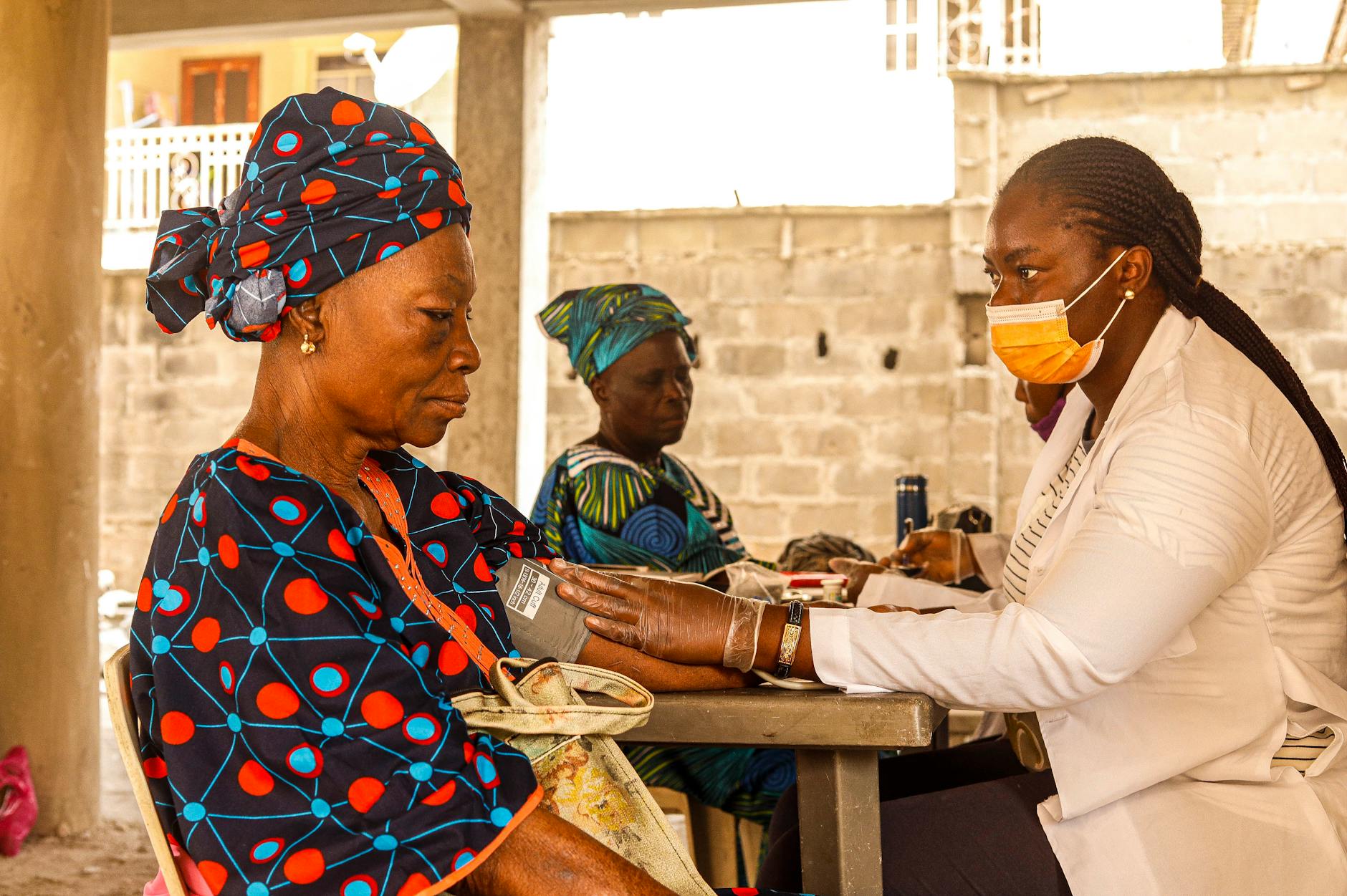
M.I.A.’s case occurred at a moment when public health had become an unusually high-stakes cultural issue. During the COVID-19 pandemic, vaccine stance became a litmus test for trustworthiness and institutional values in ways unrelated to vaccine efficacy itself. major media outlets, corporations, and cultural institutions made explicit decisions to align their platforms with public health messaging, which meant excluding or distancing from figures who deviated from that messaging. This dynamic extended beyond Vogue. Many entertainment platforms, including music streaming services and broadcasting networks, became more selective about platform access for artists with public health skepticism.
Some made these decisions through formal policies; others through informal editorial choices like M.I.A.’s Vogue experience. The cumulative effect was that public dissent on health matters carried tangible economic costs, particularly for public figures whose career access depends on media and partnership ecosystems. It’s worth noting that institutional responses to controversial statements aren’t inherently new—cultural institutions have always made editorial decisions based on perceived alignment with their values. What was different during the pandemic was the speed, visibility, and breadth of these decisions. The expansion of social media gave individual statements immediate reach and permanence, and institutional responses followed more quickly than they might have in previous eras.
Implications for Entrepreneurs and Public Figures Building Brands
For entrepreneurs building personal brands or working in industries where media access and partnerships matter, M.I.A.’s experience offers practical lessons about the costs of controversial public positions. The most obvious one is that statements made on social media—where reach is instant and permanence is assumed—can immediately trigger institutional responses that affect business opportunities. This isn’t abstract; it’s a quantifiable risk. The second implication is about relationship management with institutions. M.I.A. discovered through exclusion, rather than through negotiation, that her public statements had created a values conflict with a major publication.
For entrepreneurs, this suggests that when building brands or pursuing partnerships with institutions that have explicit values, those values deserve serious consideration before making public statements that contradict them. A music label might have different values than a pharmaceutical company, but both may make partnership decisions based on perceived misalignment. The tradeoff here is significant: maintaining authentic voice and genuine belief expression versus preserving access to institutional platforms and partnership opportunities. Many public figures and entrepreneurs choose strategic silence on controversial topics, not because they’re uncertain about their beliefs, but because they’ve recognized that public expression carries opportunity costs. Others choose to express themselves fully and accept the exclusions that may follow. There’s no objectively correct answer, but the calculus is now more visible after cases like M.I.A.’s.
The Uncertainty of Institutional Values and Future Changes
One critical limitation in this landscape is that institutional values and response patterns aren’t always predictable or consistent. Vogue made a specific decision about M.I.A. based on what it framed as respect for healthcare workers—but another publication might have made a different call on the exact same statements. Similarly, as public sentiment shifts on health topics or other issues, institutions may revise their own positions and their appetite for excluding figures based on previous statements. The warning here is important: public statements made in response to current institutional values may become liabilities in a different institutional environment, or they may become normalized. Entrepreneurs who calculate their public positioning based on current institutional preferences should recognize that those preferences aren’t permanent.
What gets someone excluded from one platform in 2020 may be editorial clickbait on another platform in 2025. This volatility makes it difficult to map out a long-term strategy purely based on institutional alignment. Additionally, institutional responses aren’t necessarily transparent or appealable. M.I.A. couldn’t negotiate with Vogue about whether her statements truly disqualified her from coverage—the decision had already been made. For entrepreneurs facing similar situations, there’s often no mechanism to challenge exclusions or to make the case that partnership should override ideological concerns. The asymmetry of power between major institutions and individual public figures means that business exclusions can feel arbitrary and unappealable.

Comparing Institutional Response Patterns
Different industries and institutions show notably different response patterns to controversial statements. Entertainment and media companies responded broadly to health-related statements during the pandemic; financial services companies typically took a narrower approach; academic institutions varied widely in their responses. Understanding these patterns matters because an entrepreneur operating in one industry can’t assume that the same statement will have the same institutional consequences in another.
Vogue’s decision to exclude M.I.A. was framed as an editorial value choice; a music label might have weighed the same statements differently, potentially prioritizing artistic merit over ideological alignment. This comparison suggests that entrepreneurs should understand their specific industry’s values hierarchy and response patterns before making public statements. What’s considered a disqualifying statement in magazine editorial depends heavily on that publication’s audience expectations and institutional identity.
Looking Forward—How Public Figures Navigate the New Landscape
The COVID-19 pandemic created an unusual moment where health statements became central to institutional value-making. As that immediate crisis receded, institutions began to recalibrate their responses to similar statements, though the fundamental dynamic—that ideological alignment affects access—remains intact. For entrepreneurs and public figures moving forward, this landscape likely won’t reverse completely; institutions have become more explicitly values-focused, not less.
The practical path forward involves recognizing that public positioning, particularly on issues institutions have defined as values-critical, carries both benefit and risk. Some public figures have built successful brands specifically around contrarian or non-mainstream positions; others have built brands around explicit alignment with institutional values. The choice between these paths is strategic and has real business consequences that extend well beyond reputation. M.I.A.’s case serves as a reminder that these consequences are now more visible, more immediate, and harder to predict or reverse once institutional decisions have been made.
Conclusion
M.I.A.’s 2020 exclusion from British Vogue illustrates how personal public statements on ideologically charged topics can trigger rapid institutional business responses. Her experience demonstrates that in the modern media environment, cultural institutions now make partnership and platform decisions based explicitly on values alignment, and that entrepreneurs and public figures should understand the specific costs of deviation from institutional positions in their respective industries. The decision wasn’t framed as censorship, but rather as an editorial values choice—a distinction that matters for how we understand what happened, but not necessarily for the practical business consequences M.I.A. experienced.
For entrepreneurs building personal brands or navigating partnership opportunities with major institutions, the key takeaway is straightforward: public positioning on controversial issues is now integrated into business calculus in ways that weren’t always visible before. Understanding your industry’s values hierarchy, recognizing that institutional positions shift over time, and honestly assessing the opportunity costs of various public stances are now essential parts of brand strategy. The exclusion M.I.A. faced wasn’t unprecedented, but its visibility and her willingness to publicize it opened a broader conversation about what ideological gatekeeping looks like in the 21st century economy.