
The legendary American muscle car has been fundamentally reinvented for the modern era. The 2025 Dodge Charger SIXPACK represents the convergence of a seventy-year automotive heritage with cutting-edge turbocharged engineering—a direct response to changing market demands, emissions regulations, and consumer expectations. This isn’t a gradual evolution; it’s a decisive pivot where Dodge abandoned the traditional naturally-aspirated V8 architecture that defined an entire genre, replacing it with a 3.0-liter Twin Turbo inline-six engine capable of 550 horsepower in its High Output configuration.
This decision marks a watershed moment in American automotive culture. For the first time since the Charger’s debut in 1966, Dodge chose a turbocharged powerplant as the standard engine for their flagship muscle car. The engineering challenge was substantial: deliver the visceral power and acceleration that muscle car drivers expect while meeting modern fuel economy and emissions standards. The result is a vehicle that technically outperforms many of its predecessors in raw horsepower, yet fundamentally changes what “American muscle” means.
Table of Contents
- How Turbocharging Resurrected the American Muscle Car
- The Twin-Turbo Engineering Innovation Behind the Charger SIXPACK
- How Displacement Went Out of Fashion in American Muscle
- Performance Comparisons and the Real-World Horsepower Question
- Reliability Concerns and Long-Term Maintenance Realities
- Historical Precedent: The Buick Grand National and “Giant-Killer” Philosophy
- The Future of American Muscle in an Electrified World
- Conclusion
How Turbocharging Resurrected the American Muscle Car
Turbocharged engines represent a return to first principles for Detroit’s muscle car makers—forced induction was not new to American automotive engineering, but its application to mainstream muscle cars had largely disappeared by the early 2000s. The 1962 Oldsmobile Jetfire holds the distinction of being the first factory-turbocharged muscle car ever produced, decades before turbocharging became fashionable in performance vehicles. That early experiment proved the concept worked, but it took decades for the technology to mature enough to become reliable, efficient, and powerful enough to justify replacing naturally-aspirated V8s.
The real turning point came with vehicles like the 1980s Buick Grand National, which demonstrated that a turbocharged six-cylinder engine could compete directly with larger, naturally-aspirated engines. The Grand National produced over 200 horsepower from a V6, earning it the nickname “giant-killer” among performance enthusiasts—a car that could outrun vehicles with significantly larger displacement. That historical precedent gave engineers at Dodge a proven template: forced induction could deliver both power and efficiency, a combination that naturally-aspirated engines struggle to achieve simultaneously.
The Twin-Turbo Engineering Innovation Behind the Charger SIXPACK
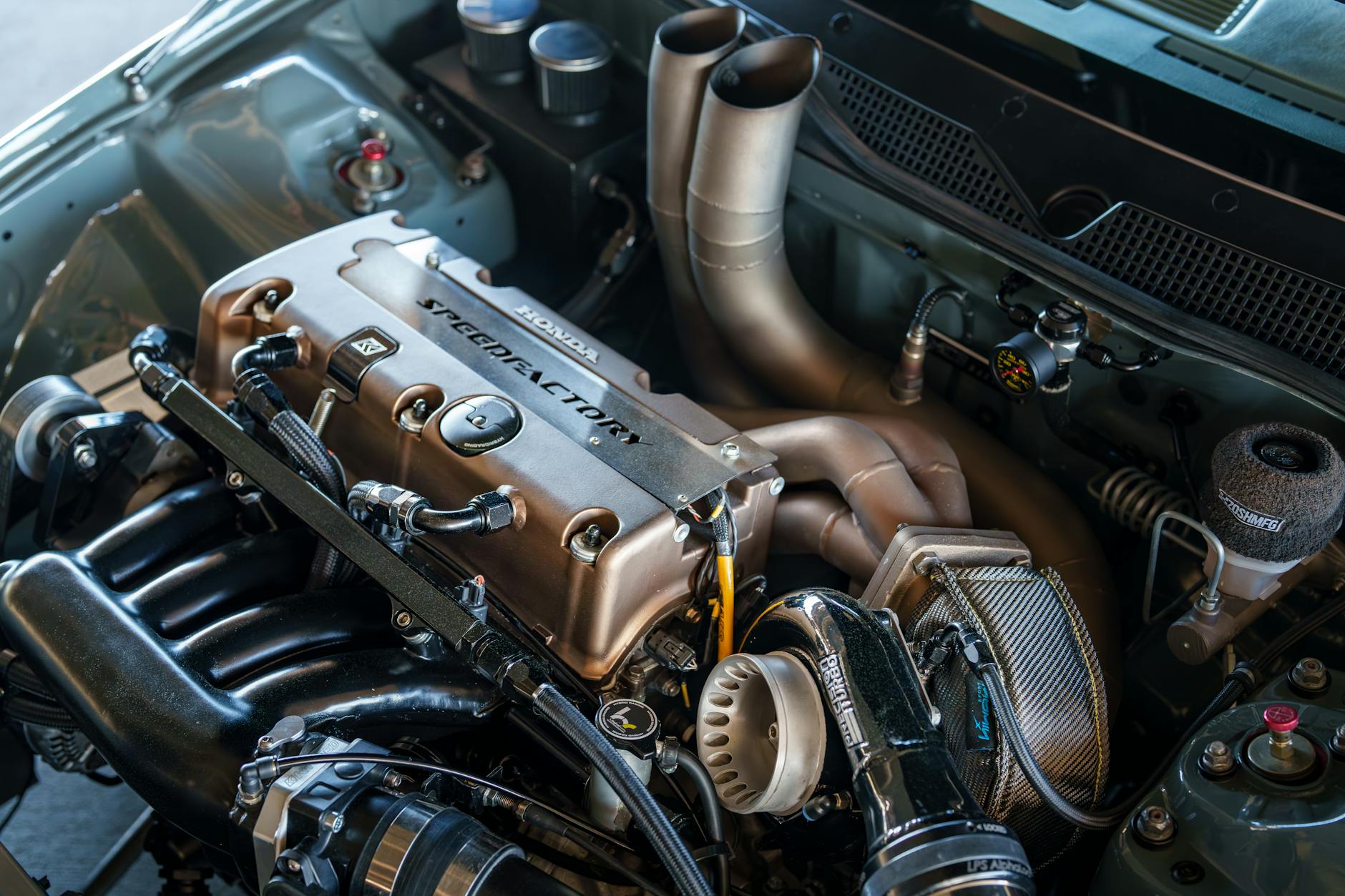
The 3.0-liter Twin Turbo Hurricane inline-six sits at the heart of what Dodge calls the “SIXPACK” brand, a deliberately nostalgic nod to the original 1970 Dodge Charger R/T. The high Output version produces 550 horsepower and 500 pound-feet of torque, figures that rival the most powerful naturally-aspirated V8s that previously powered the Charger. The Standard Output variant produces 420 horsepower, still substantial but positioned as a more efficient alternative for buyers who prioritize daily drivability over maximum performance.
However, the shift to inline-six architecture introduces real tradeoffs that buyers must understand. Twin-turbocharged engines generate significant heat and require more sophisticated cooling systems, which increases complexity and maintenance costs compared to simpler naturally-aspirated designs. The turbo lag—the slight delay between pressing the accelerator and feeling full power delivery—is typically imperceptible in modern vehicles, but it represents a different driving experience than the immediate throttle response of a traditional V8. Additionally, turbocharged engines typically require premium fuel to prevent engine knock, adding an ongoing cost to ownership that many buyers underestimate.
How Displacement Went Out of Fashion in American Muscle
The move from a traditional large-displacement V8 to a smaller turbocharged inline-six reflects a fundamental shift in how automotive engineers define “power” and “performance.” The Pontiac Turbo Trans Am, the first factory turbo V8 muscle car, proved that smaller displacement engines equipped with forced induction could deliver comparable performance metrics to their naturally-aspirated counterparts. Modern turbocharged engines have taken this principle much further: the 2025 Charger’s 3.0-liter engine produces more horsepower than naturally-aspirated V8s of nearly twice its displacement would have twenty years ago. This evolution is not driven by nostalgia or performance enthusiasts—it’s driven by federal emissions regulations and fuel economy standards.
The EPA mandates that manufacturers meet Corporate Average Fuel Economy (CAFE) targets across their entire fleet, which forces performance car makers to offset their muscle cars with more efficient vehicles. A turbocharged inline-six achieves better fuel efficiency ratings than a large displacement V8, allowing Dodge to continue building powerful vehicles while meeting regulatory requirements. The irony is that regulations often get credited with “killing” the muscle car, when in reality they’ve simply forced manufacturers to be more creative about how they deliver the performance that customers demand.

Performance Comparisons and the Real-World Horsepower Question
When comparing the 2025 Charger SIXPACK’s 550 horsepower to previous-generation naturally-aspirated Chargers, the numbers are genuinely impressive. The previous generation’s V8 engines produced between 370 and 485 horsepower depending on the year and trim level. On paper, the new turbocharged six-cylinder wins decisively. Yet horsepower is only one component of the driving experience, and it can be misleading when comparing turbocharged and naturally-aspirated engines. Peak horsepower numbers tell an incomplete story.
A naturally-aspirated V8 typically reaches its maximum horsepower at higher RPM and maintains that output across a narrow band of engine speed. A turbocharged engine produces its peak power differently, with maximum torque arriving earlier in the acceleration curve. For everyday driving and rapid acceleration from moderate speeds, this characteristic actually favors the turbocharged engine. However, sustained high-RPM performance—such as on a racetrack where maximum power output matters across the entire acceleration range—reveals the limitations of the forced-induction approach. The comparison becomes clear when examining alternatives: the 2024 Ford Mustang EcoBoost turbocharged four-cylinder produces 315 horsepower and 350 pound-feet of torque, a capable engine that demonstrates how turbocharging has become the default choice for affordable performance, not just a solution for specialty vehicles.
Reliability Concerns and Long-Term Maintenance Realities
Moving from proven V8 architecture to a new turbocharged inline-six represents a calculated risk for both manufacturer and consumer. While turbocharged engines have been refined over decades—major automakers have been producing them since the 1970s—the application to a high-performance muscle car nameplate introduces new variables. The 2025 Charger represents Dodge’s first full-scale commitment to turbocharged muscle car powerplants, meaning long-term reliability data is simply unavailable. The practical maintenance reality is that turbocharged engines demand more attention than naturally-aspirated alternatives.
The turbocharger itself is a precision component that relies on bearing lubrication and operates at extreme temperatures—failure of a turbocharger bearing or seals can result in repair costs exceeding $1,500 to $3,000. Most turbocharged engines also require more frequent oil changes because the turbocharger’s components are extremely sensitive to oil quality and degradation. Additionally, carbon buildup in turbocharged direct-injection engines can occur more rapidly than in traditional port-fuel-injected engines, necessitating periodic fuel system cleaning to maintain optimal performance. These are not failures of the Charger specifically, but rather inherent characteristics of turbocharged engine technology that buyers should anticipate over the vehicle’s lifespan.

Historical Precedent: The Buick Grand National and “Giant-Killer” Philosophy
The 1980s Buick Grand National stands as a crucial historical reference point for understanding how turbocharged performance engines have disrupted traditional muscle car categories. The Grand National’s turbocharged 3.8-liter V6 produced approximately 200 horsepower in early years and 235 horsepower by the final generation. These numbers seem modest by modern standards, yet the Grand National became one of the most revered performance cars of the era, capable of out-accelerating vehicles with substantially larger displacement and comparable horsepower ratings.
The Grand National earned its “giant-killer” nickname because it demonstrated an uncomfortable truth: displacement and raw horsepower tell only part of the story. The Oldsmobile Jetfire, which first introduced factory turbocharging to American muscle cars back in 1962, also serves as a reminder that turbocharging is not a recent innovation in Detroit. The Jetfire was ambitious, powerful, and equipped with a turbocharged 215-cubic-inch V8, proving that forced induction could function reliably in production vehicles more than sixty years ago. These historical examples suggest that Dodge’s decision to turbocharge the Charger is less of a radical departure than it might initially appear—it’s a return to a proven formula that was briefly abandoned when naturally-aspirated V8s could satisfy both consumer demands and regulatory requirements.
The Future of American Muscle in an Electrified World
The 2025 Charger SIXPACK represents a transitional moment in automotive history. Dodge and other American manufacturers recognize that purely internal combustion muscle cars have perhaps one or two additional generations before electrification becomes the dominant technology. The investment in turbocharged engines now is less about “the future of muscle” and more about maximizing the performance and appeal of the last generation of traditionally-powered vehicles. Within ten years, a naturally-aspirated V8 or turbocharged inline-six will likely seem as quaint as a carbureted engine does today.
The broader implications for enthusiasts and manufacturers are significant. Performance and horsepower will not disappear—electric motors can produce enormous torque instantly—but the experience of driving a turbocharged internal combustion engine will become increasingly rare. The 2025 Charger SIXPACK may eventually be viewed as a milestone vehicle, the moment when American muscle car makers adapted their formula to survive in a regulated, emissions-conscious world. Whether future generations will view turbocharged engines with the same nostalgia and reverence that current enthusiasts reserve for big-displacement V8s remains an open question.
Conclusion
The 2025 Dodge Charger SIXPACK demonstrates that the American muscle car formula can evolve without becoming unrecognizable. By combining a legendary nameplate with modern turbocharged engineering, Dodge has created a vehicle that honors the genre’s history while adapting to contemporary realities. The decision represents pragmatism rather than experimentation—emissions regulations, fuel economy standards, and consumer expectations for efficiency have made traditionally-configured naturally-aspirated V8s increasingly difficult to justify in the modern market.
For prospective buyers, the Charger SIXPACK offers legitimately impressive performance: 550 horsepower, rapid acceleration, and an iconic American nameplate. However, purchasing decisions should account for the realities of turbocharged engine ownership, including premium fuel requirements, higher maintenance costs, and the unknown long-term reliability profile of this particular platform. The convergence of legendary muscle car heritage and turbocharged innovation represents an interesting moment in automotive history—a moment that will likely appear fleeting once electrification becomes the standard for performance vehicles.