
Commodity price movements have become a critical factor shaping when and where international companies choose to go public in Asia. When oil prices drop below $60 per barrel or precious metals surge on global investment demand, these shifts fundamentally alter the financial calculations companies make about IPO timing, valuation, and market readiness. A metals mining company considering a Hong Kong listing in 2026 faces a very different calculus than one would have in 2025, largely because the World Bank projects global commodity prices will fall 7% this year while precious metals are forecast to rise 5%—creating winners and losers across different commodity-dependent sectors simultaneously. The influence operates on multiple levels.
First, commodity prices affect the valuations of companies dependent on those commodities as inputs or outputs. Second, price movements shape broader investor sentiment and risk appetite in Asian markets. Third, exchange rate volatility—the primary driver of commodity price movements in 2026—directly impacts both the cost of going public and the competitiveness of companies seeking international capital. The result is that a company’s IPO decision has become inseparable from reading commodity forecasts and understanding how those forecasts translate into market conditions in Asia’s trading hubs.
Table of Contents
- Why Commodity Price Forecasts Shape IPO Timing in Asia’s Markets
- Hong Kong’s Emergence as the IPO Destination for Commodity-Exposed Companies
- Geopolitical Risk and Metal/Mining Sector IPO Decisions
- How Companies Strategically Time IPO Windows Around Market Sentiment Shifts
- Exchange Rate Volatility as the Hidden Mechanism Behind Commodity Impact
- Investment Activity in Asia as a Driver of Precious Metals IPO Windows
- Looking Ahead—Commodity Cycles and Asia IPO Pipeline Strategy
- Conclusion
- Frequently Asked Questions
Why Commodity Price Forecasts Shape IPO Timing in Asia’s Markets
International companies planning Asian IPOs now treat commodity price outlooks as seriously as they treat regulatory roadmaps. Consider a petroleum services company or a materials processor—their profitability, growth projections, and thus IPO valuations hinge directly on what Brent crude oil is forecast to do. The Citi Commodities Market Outlook projects Brent crude at $60 per barrel in 2026, down from $68 expected in 2025. That $8 per barrel drop cascades through project economics, profit margins, and investor return projections. A company that would have looked attractive at $68 oil may struggle to price its IPO at $60 oil, pushing management teams to either delay their flotation or scale back fundraising ambitions.
The Asian IPO market processed $90 billion in deal volume in 2025, with momentum continuing into 2026, yet this headline number obscures the strategic choices happening beneath it. Companies are not randomly distributing themselves across time. They’re clustering their IPO announcements around windows when commodity forecasts favor their sector. A precious metals company benefits enormously from the World Bank’s projection of 5% gains in precious metals prices in 2026—an extension of the 40%+ surge seen in 2025 driven by investment activity across Asia. This same company might have shelved IPO plans entirely if those forecasts pointed downward. The timing decision becomes less about “we’re ready” and more about “the market is ready for what we are.”.
Hong Kong’s Emergence as the IPO Destination for Commodity-Exposed Companies
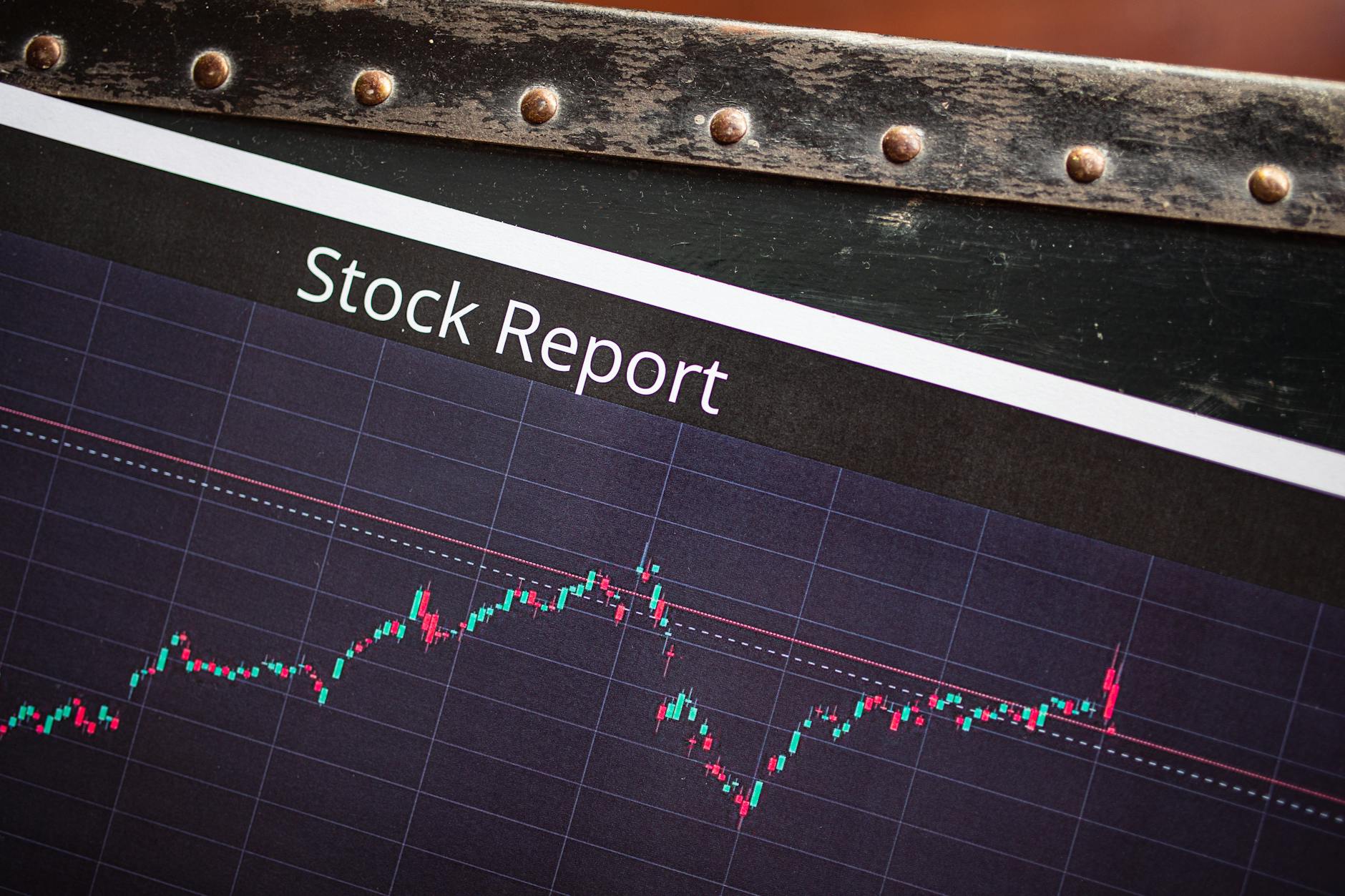
Hong Kong tripled its deal volume year-over-year in 2025 and carries hundreds of flotations in its 2026 pipeline, making it the de facto capital for international companies with commodity exposure seeking Asian listings. The reason is partly structural—Hong Kong has deep pools of commodity-focused investors, strong connections to Chinese industrial end-users, and pricing mechanisms aligned with global commodity benchmarks. But it’s also partly about timing. Hong Kong investors have shown strong appetite for commodity stories when the underlying prices are forecast to move favorably, which creates a natural market-building effect for companies whose sectors stand to benefit from 2026’s specific commodity outlook. The limitation here is real and worth understanding: Hong Kong’s attractiveness for commodity stories can reverse quickly.
When geopolitical risk spikes—as it has in early 2026 with Middle East tensions—energy prices become more volatile, and energy-sector IPOs face wider bid-ask spreads from investors. A company planning to float a $500 million energy-infrastructure play in Hong Kong might find investors suddenly demanding 3-4% higher yield requirements due to geopolitical premium. The J.P. Morgan Asia Pacific IPO Outlook explicitly notes that escalating geopolitical tensions have created more challenging market conditions for flotations, particularly in commodity-exposed sectors. This means companies must not only read commodity price forecasts but also understand how geopolitical events will move those forecasts intra-year.
Geopolitical Risk and Metal/Mining Sector IPO Decisions
The metals and mining sector faces the sharpest intersection of commodity prices and geopolitical risk. Research published on geopolitical risk and IPO underpricing in China shows that geopolitical events have a stronger impact on metals and mining IPO decisions than on most other sectors. A copper mining company considering a 2026 Asian IPO must now factor in not just copper price forecasts but the probability that Middle East tensions, US-China tariff escalation, or supply chain disruptions will alter those forecasts within months of going public.
The practical consequence is that metals and mining companies often deprioritize Asia IPO windows when geopolitical risk is elevated, even if commodity prices appear favorable. A company might see strong copper price forecasts for mid-2026 but delay its Hong Kong IPO announcement because the geopolitical risk premium makes investor pricing expectations unreasonably tight. Conversely, companies in precious metals benefit from “safe haven” flows into Asia during periods of geopolitical stress, creating a bifurcated market where metals mining faces headwinds but precious metals refiners might actually find improved IPO windows. This sector-specific divergence means that generalizations about “commodity prices and Asian IPOs” can obscure the reality that different commodity types operate under different geopolitical regimes.
How Companies Strategically Time IPO Windows Around Market Sentiment Shifts
International companies have learned that IPO success correlates strongly with timing their flotation during periods when stock market returns are elevated—a pattern documented in research on macroeconomic determinants of IPO waves. Commodity price movements influence broader market sentiment, which in turn affects stock market returns and investor appetite for new listings. When oil prices are falling (as forecast for 2026), energy sector stocks often underperform, cooling investor appetite for energy company IPOs. When precious metals prices are rising, investors develop risk-on sentiment and appetite for discretionary bets in materials companies, opening IPO windows for precious metals producers.
The trade-off companies face is between waiting for the “perfect” commodity price environment and accepting the cost of delay. A company that postpones its Hong Kong IPO from Q1 2026 to Q3 2026, hoping for better commodity price forecasts, risks losing management focus, facing talent retention challenges in the pre-public limbo period, and potentially encountering deteriorated market conditions that could have been worse than the original timing. Conversely, going public during a poor commodity cycle can result in IPO underpricing and leaving valuation on the table. The best-performing strategy appears to be launching IPO processes early enough to complete flotations when commodity forecasts shift favorably, rather than chasing perfect conditions that may never arrive.
Exchange Rate Volatility as the Hidden Mechanism Behind Commodity Impact
HedgePoint Global research identifies exchange rate fluctuations as the primary driver of commodity price volatility in 2026—and this deserves emphasizing because it shifts where companies should focus their strategic attention. Exchange rate movements directly affect price formation, competitiveness, and the valuation multiples applied to commodity-exposed companies during IPO pricing. A company denominated in Chinese yuan faces different commodity price exposure than one denominated in Hong Kong dollars, even if both are operationally identical, because the yuan-dollar exchange rate moves differently than the Hong Kong dollar rate. This creates a real limitation in treating commodity prices as a simple input to IPO decisions.
The commodity price forecast might be accurate, but exchange rate assumptions underlying that forecast might prove wrong, invalidating the IPO logic. A company planning a Hong Kong IPO based on commodity price and exchange rate assumptions from January 2026 might find those assumptions had shifted significantly by the time it reaches roadshow season in April. The practical warning here is that companies should not take published commodity price forecasts as static inputs to IPO timing. Instead, they should conduct sensitivity analysis on exchange rate scenarios and understand how their IPO valuation changes if exchange rate movements diverge from consensus forecasts.

Investment Activity in Asia as a Driver of Precious Metals IPO Windows
The 40%+ surge in precious metals prices in 2025, with further 5% gains forecast for 2026, has been driven substantially by investment activity flowing into Asia. This creates a specific and actionable opportunity for precious metals refiners, processors, and mining companies considering Asian IPOs. Precious metals have become a de-facto hedge against geopolitical risk and currency volatility in Asia, with investors treating gold and silver as portfolio insurance. This investment demand creates a uniquely favorable IPO environment for companies in this space, pulling in international precious metals companies that might otherwise have sought listings in London, Toronto, or New York.
A precious metals refinery based in Southeast Asia considering an IPO now has a several-year window where Asian investor demand for its story is elevated. The World Bank’s projection of continued precious metals price strength in 2026 extends this window. However, the company should be mindful that this investor appetite is cyclical and can reverse if geopolitical tensions ease or if central banks begin cutting interest rates, reducing the attractiveness of physical metals as a hedge. The example is specific: a company with this profile should capitalize on 2026’s favorable conditions rather than waiting for “even better” markets, because the structural drivers supporting precious metals demand are partially temporary.
Looking Ahead—Commodity Cycles and Asia IPO Pipeline Strategy
The commodity market outlook for 2026 and beyond suggests that companies should expect continued volatility in IPO conditions based on commodity sector positioning. Global commodity prices falling 7% overall while precious metals rise 5% reflects a diverging commodity cycle—traditional commodities are losing value while safe-haven assets appreciate.
This divergence will create a bifurcated IPO market where companies in declining-value commodity sectors face headwinds while those in rising-value sectors enjoy tailwinds. For international companies evaluating whether and when to go public in Asia, the forward-looking insight is clear: commodity price forecasts matter enormously, but they matter most when combined with understanding geopolitical risk, exchange rate volatility, and sector-specific investor demand dynamics in Asia. Companies should not attempt to time the market perfectly, but they should understand their position relative to commodity cycles and make deliberate choices about whether current windows represent genuine opportunities or temporary noise.
Conclusion
Commodity price movements have fundamentally reshaped how international companies approach IPO decisions in Asia. The direction, magnitude, and volatility of commodity prices affect valuations, investor sentiment, and the availability of capital in ways that can advance or delay IPO plans by quarters or years. The 2026 outlook—falling energy prices, rising precious metals prices, and elevated geopolitical risk—creates very different opportunities for different companies.
A energy sector company faces constrained IPO conditions while a precious metals company enjoys rare tailwinds. The practical implication for companies is straightforward: treat commodity forecasts and exchange rate assumptions as material strategic inputs to IPO timing, understand how your company’s economics change across different commodity price scenarios, and recognize that perfect market conditions rarely arrive. Instead, aim to float your IPO during commodity windows favorable to your sector, accept that some volatility is inevitable, and build IPO plans robust enough to succeed across multiple commodity price scenarios. The companies that will succeed in Asia’s 2026 IPO market are those that understand not just where commodities are heading, but how those movements ripple through valuations, investor sentiment, and capital availability in their specific corner of the market.
Frequently Asked Questions
Does my company need to be a commodity producer to be affected by commodity price movements in an IPO?
No. Any company with commodity-exposed costs or revenues—whether that’s an airline exposed to oil prices, a food processor exposed to grain prices, or a technology manufacturer exposed to metals costs—will face valuation impacts from commodity price forecasts. Even companies without direct commodity exposure feel indirect effects through customer demand and investor sentiment shifts tied to commodity cycles.
How far ahead should we plan our IPO based on commodity forecasts?
Commodity price forecasts beyond 12-18 months become increasingly unreliable. Plan your IPO roadshow for a window 12-18 months out, monitor commodity forecasts continuously, and build flexibility into your timeline. Companies that lock in a specific IPO date 24+ months in advance risk missing windows when commodity conditions shift favorably.
If commodity prices are falling, should we delay our IPO indefinitely?
Not necessarily. Falling commodity prices in declining-value sectors are a headwind, but they’re not a reason to shelve IPO plans indefinitely. Instead, adjust your valuation expectations downward, communicate clearly to investors about commodity exposure and risk mitigation strategies, and consider whether your growth story is compelling enough to overcome commodity sector headwinds. Some companies successfully go public during commodity downturns by emphasizing operational efficiency and cost discipline.
How do exchange rate movements affect our IPO valuation if we’re listing in Hong Kong?
Exchange rate movements directly affect the valuation multiples applied to your company and the relative attractiveness of your stock to different investor groups. A strong Hong Kong dollar can make your IPO more expensive for foreign investors to buy while making your commodity cost exposure cheaper. Work with your IPO advisors to stress-test valuation scenarios across multiple exchange rate assumptions, and understand which investor groups benefit from different exchange rate regimes.
Should we be concerned about geopolitical risk affecting our IPO window?
Yes. Geopolitical risk disproportionately affects energy and metals mining IPOs by widening bid-ask spreads and increasing required yields. If geopolitical tension is elevated in your sector, either accelerate your IPO timeline to complete before tension further escalates, or delay until geopolitical risk moderates. Attempting to IPO during heightened geopolitical risk in your sector typically results in wider pricing ranges, lower valuation multiples, and more difficult investor feedback.